When life feels heavy, most people try to “think” their way out. I know I do! Your body often asks for something more basic first—safety, connection, self-trust.
In her energy anatomy teachings, Caroline Myss describes the first three chakras as our “ground-level” power centers. They shape identity, relationships, and personal power in daily life. They also influence how steadily you can live in the higher centers of the heart, voice, intuition, and faith.
This is the difference between below and above. Below deals with the physical world and social reality. Above guides meaning, intuition, and spiritual connection. And the bridge is integration, not escape.
What “below” means in Myss’s framework
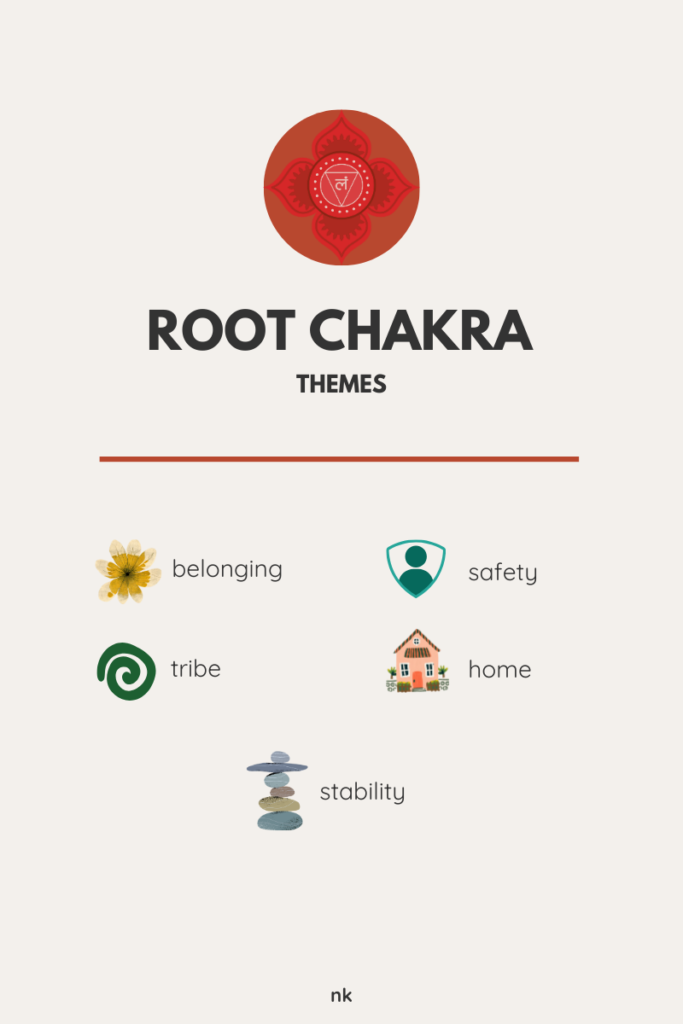
The first chakra (Root) supports belonging and stability. Myss calls it the foundation of emotional and mental health. It carries your connection to family patterns, culture, and identity.
The second chakra (Sacral) focuses on relationships, control, and survival themes. It includes creativity, sexuality, and finances. It also shapes how you exchange energy with people.
The third chakra (Solar Plexus) develops self-esteem, boundaries, and personal honor. It asks you to become someone you respect.
What “above” means, and why it can feel far away
Many people “reach upward” when life hurts. They meditate, visualize, and look for signs. Those tools can help. However, Myss points out a key truth.
At the fourth chakra, we move out of physical territory and into spiritual territory. If the lower centers feel unsafe, the body often clamps down. Then spiritual work can feel foggy, forced, or draining.
So we begin where your life actually lives. The bottom three chakras.
Chakra One (Root): Belonging, Safety, and “All Is One”
Caroline Myss teaches that the first chakra supports identity and belonging. It holds themes of family bonding, home, loyalty, and security. Its sacred truth is “All is One.”
When this chakra feels supported
You feel steady during change.
Trust your right to exist.
Respect your roots, without losing yourself.
Tend to plan well.
Handle money and time with less panic.
Recover faster after conflict.
When this chakra feels strained (common pain points)
Myss names abandonment fears and safety concerns here.
People may feel “homeless” inside, even with a home.
They may distrust life or brace for bad news.
You might see overworking, hoarding, or constant worry.
You might see rigidity around family loyalty.
Or you might see the opposite, and cut off too quickly.
How this develops over time
Early on, we learn what “safe” means.
We learn what love costs.
We learn the family rules, spoken and unspoken.
In adulthood, this can mature beautifully.
You keep your values, and you build your own life.
You honor your tribe, and you choose your boundaries.
Or it can harden.
You may fear authority or cling to it.
You may confuse loyalty with self-abandonment.
A simple first-chakra check-in (Myss-inspired)
Myss’s daily practice invites you to drop attention to the base of the spine.
Try this for 30 seconds:
- Put a hand on your low belly.
- Exhale slowly.
- Ask: “What do I need today to feel safe enough?”
- Choose one small, practical action.
Practical counts.
A glass of water can be spiritual.
A boundary can be sacred.
Chakra Two (Sacral): Relationships, Desire, and “Honor One Another”
Myss teaches that the second chakra centers on personal power, creativity, sexuality, and finances.
It holds themes of control, risk, and one-on-one relationships.
Its sacred truth is “Honor One Another.”
She also describes second-chakra power as active in every exchange we make.
That includes love, work, friendship, and conflict.
When this chakra feels supported
You create without forcing it.
Feel pleasure without guilt.
Connect without losing your center.
Practice healthy reciprocity.
You can give.
And you can receive.
When this chakra feels strained (common pain points)
Myss lists fear of loss of control here.
She names themes like betrayal, abandonment, addiction, and financial loss.
Many people also carry guilt and blame in this center.
This can show up as codependency.
It can show up as emotional guarding.
It can show up as struggling to trust your own desires.
How this develops over time
At first, we learn bonding through caregivers and peers.
We learn what gets us closeness.
We learn what gets us punished.
As adults, this can turn into deep intimacy and mature partnership.
You communicate needs with kindness.
You repair conflict without collapsing.
Or it can turn into control patterns.
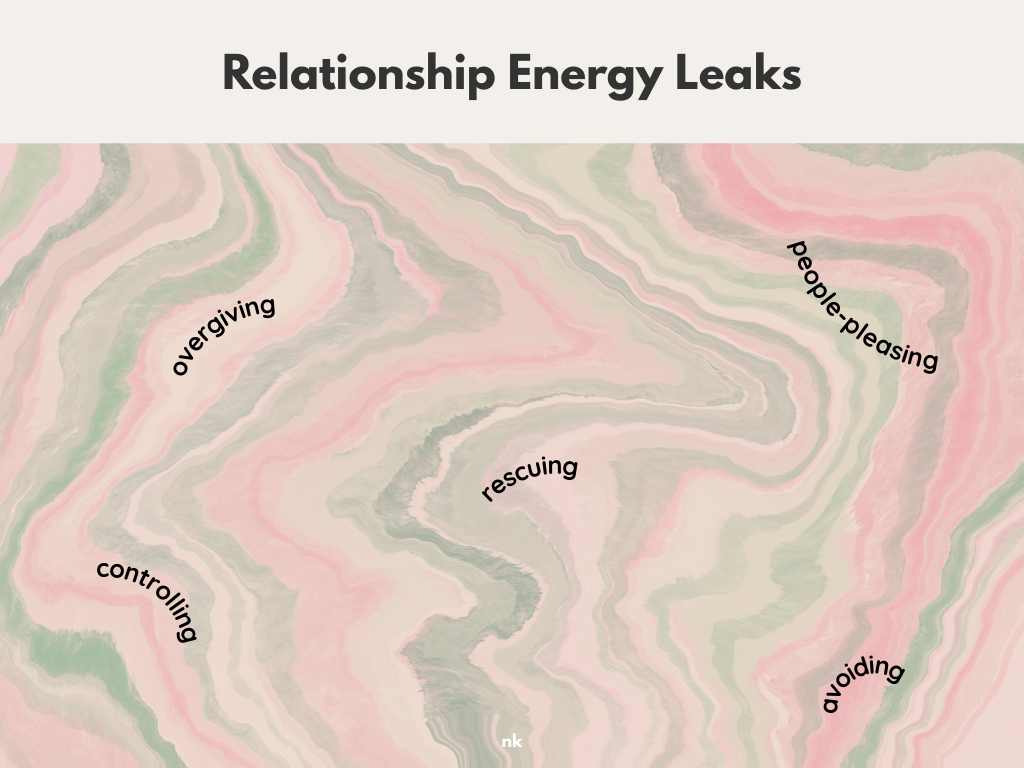
You may overgive to feel secure.
Or you may withdraw to avoid vulnerability.
A gentle second-chakra practice
Myss’s daily practice invites attention to the hips and lower back.
Try this:
- Inhale and think: “I honor the humanity in others.”
- Exhale and think: “I honor my boundaries too.”
Repeat three times.
Then ask one question.
“Where am I trading my truth for approval today?”
Chakra Three (Solar Plexus): Self-Esteem, Boundaries, and “Honor Oneself”
Myss teaches that the third chakra develops self-esteem and personality separate from tribal identity.
It teaches boundaries and a personal code of honor.
Its sacred truth is “Honor Oneself.”
In her writing, this center relates to the “self,” identity, and survival intuition.
She also emphasizes self-esteem as a major strength.
When this chakra feels supported
You trust your “gut yes” and “gut no.”
Make decisions with less second-guessing.
Choose courage without becoming harsh.
Lead without dominating.
Rest without guilt.
Accept feedback without getting crushed.
When this chakra feels strained (common pain points)
Myss lists intimidation, fear, and sensitivity to criticism here.
She also names self-respect, ambition, and fear of looking foolish.
Many adults live from approval hunger, not inner honor.
This can look like perfectionism.
It can look like procrastination.
It can look like overexplaining.
How this develops over time
We learn personal power by trial and error.
And, we learn what happens when we speak up.
Also, we learn what happens when we stay silent.
In a healthy path, you build confident humility.
You own mistakes.
You protect your dignity.
In a painful path, you armor.
You may chase status to feel safe.
Or you may shrink, so no one targets you.
How the lower three chakras shape adult life (the “below” pattern)
Here is the pattern I see again and again:
If chakra one feels unsafe, you seek control.
With chakra two, you seek validation.
And if chakra three feels unsafe, you seek approval.
Your nervous system tries to protect you.
It chooses strategies that once worked.
But old strategies get heavy.
Myss offers a hopeful reframe.
Growth asks for maturity in these centers.
Then the heart can open without fear.
This is not about blame.
It is about compassion and choice.
YOU CAN rewire your relationship with safety, connection, and self-respect.
Practical tools to tune into the first three chakras (without overwhelm)
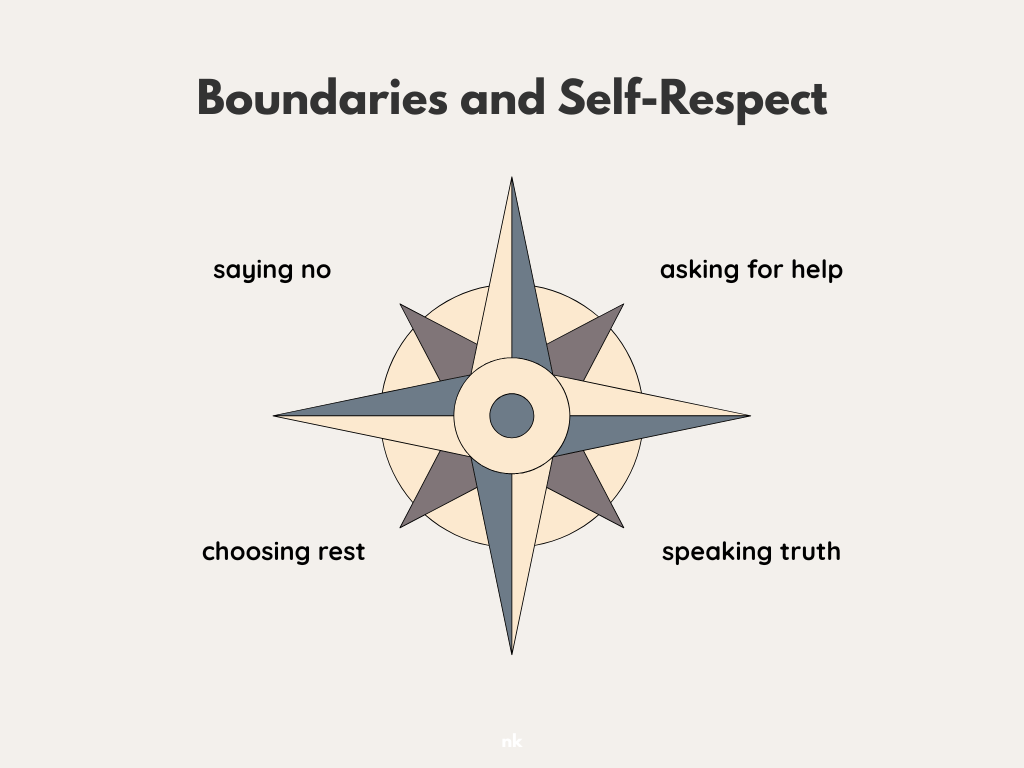
1) Use the three sacred truths as a daily compass
Myss names these truths clearly:
- Chakra 1: All is One
- Chakra 2: Honor One Another
- Chakra 3: Honor Oneself
Pick one truth each morning.
Live it in one small action.
Let that be enough for today.
2) Try a “3-minute lower chakra scan” (Myss-inspired)
Myss offers a structured daily practice that moves attention through these centers.
Here is a shorter version:
- Root: Exhale. Feel your feet. Ask: “What do I hint at fearing today?”
- Sacral: Breathe into hips. Ask: “Where do I need cleaner boundaries?”
- Solar plexus: Hand on upper belly. Ask: “What choice honors me today?”
Write one sentence.
Then take one step.
3) Choose grounding actions that match each chakra
- Root: sleep, meals, nature, body care, consistent routines.
- Sacral: honest conversations, creative play, repair, consent, clean money choices.
- Solar plexus: boundaries, follow-through, brave asks, self-respecting standards.
Small actions build trust.
Trust builds safety.
Safety opens growth.
How the services I offer can support your chakra healing
I love chakra work because it is practical.
It meets you in real life.
It also meets you in the unseen layers.
In the sessions I hold, I combine three tools from Dr. Bradley Nelson’s work:
The Emotion Code
We identify and release trapped emotions, and also Heart-Walls.
These emotional energies can weigh down your body and mind.
Many clients feel lighter and clearer afterward.
The Body Code
We look for imbalances in systems, organs, meridians, and more.
This can reveal hidden stress patterns that drain your energy.
It helps us work more specifically and gently.
The Belief Code
We identify deep-rooted beliefs that no longer serve you.
These beliefs can shape safety, relationships, and self-worth.
When they shift, choices often feel easier.
Energy work supports your healing process.
It does not replace medical care.
I always honor both intuition and appropriate healthcare.
If you want to explore this work, head to my Services page.
Tiny Habits Recipe: A daily chakra awareness habit (60 seconds)
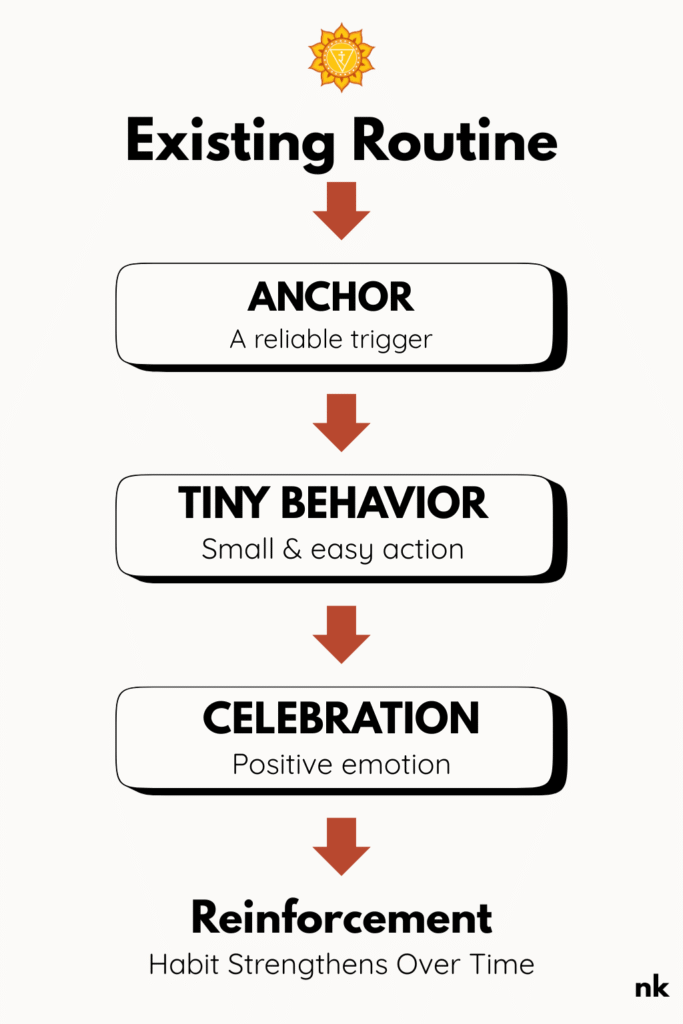
This is a BJ Fogg–style Tiny Habits recipe.
It uses an anchor, a tiny behavior, and a celebration.
Anchor (After I…): After I brush my teeth in the morning,
Tiny Behavior (I will…): I will place a hand on my low belly and take one slow breath.
Then I will say: “All is One.”
Next, I will place a hand on my lower abdomen and take one slow breath.
Then I will say: “Honor One Another.”
Next, I will place a hand on my solar plexus and take one slow breath.
Then I will say: “Honor Oneself.”
Celebrate (and I will…): I will smile and say, “That counts.”
Keep it small.
Make it easy.
Consistency beats intensity.
XO!