The Throat Chakra at a Glance: Expression With Integrity
In Eastern Body, Western Mind, Anodea Judith describes the Throat Chakra as the center of communication and expression. It is not only about talking. It includes listening, timing, honesty, and alignment. Your voice carries your identity into the world. Your words shape your relationships. Your silence can also speak loudly.
This chakra influences how you share needs and boundaries. It also influences how you ask for help. It shapes how you claim space without forcing it. When this center feels steady, your voice feels clear. When it feels strained, expression can feel risky.
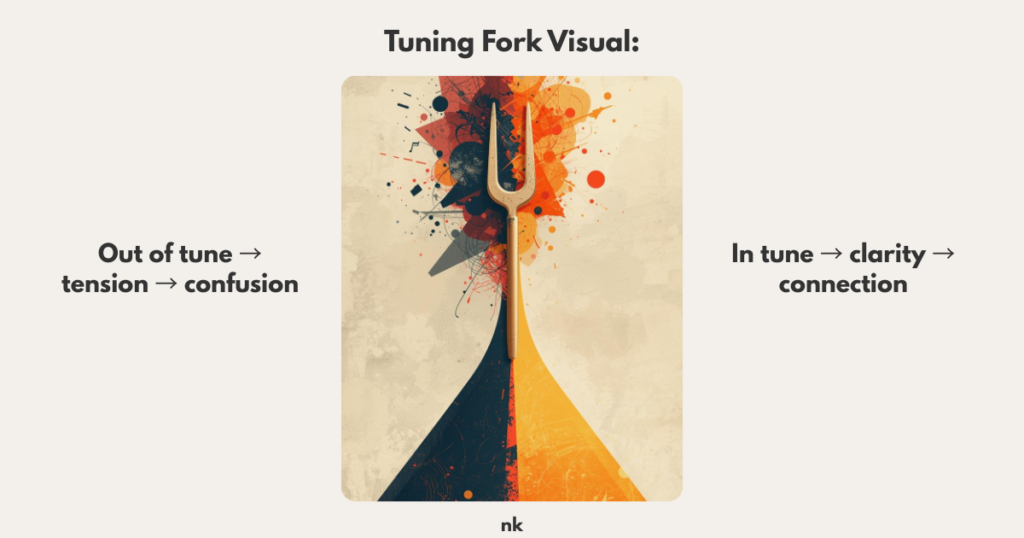
Think of the Throat Chakra like an inner instrument. When it stays tuned, you speak with calm power. When it falls out of tune, you may hide, overtalk, or shut down.
This is an area I’ve personally been working on, and it takes patience, so don’t give up if this is an area you know needs improvement. You’re not alone, trust me.
Ages 7–12: The School Years That Shape Your Voice
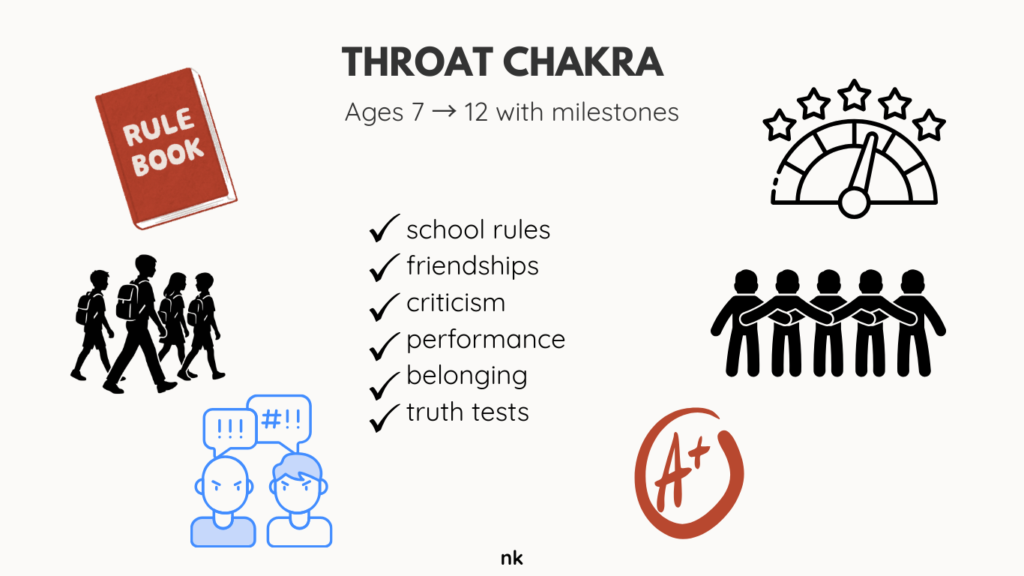
Ages 7 to 12 bring a major shift. Children move deeper into school routines. They navigate rules, performance, grades, and social belonging. They learn how adults reward behavior. They also learn which words “work” in their environment.
In this stage, kids practice language with real consequences. They learn what happens when they tell the truth. They learn what happens when they disagree. They learn how it feels to speak up in a group. They learn how it feels to be corrected.
These years teach social communication. They shape confidence, timing, and self-control. They also shape the fear of getting it wrong. Many children begin editing themselves here. They may not call it fear. They may call it being “good.”
According to Anodea Judith’s framework, this period can strengthen the throat center. Or it can train a child to silence themselves.
What Children Learn When the Throat Chakra Develops Well
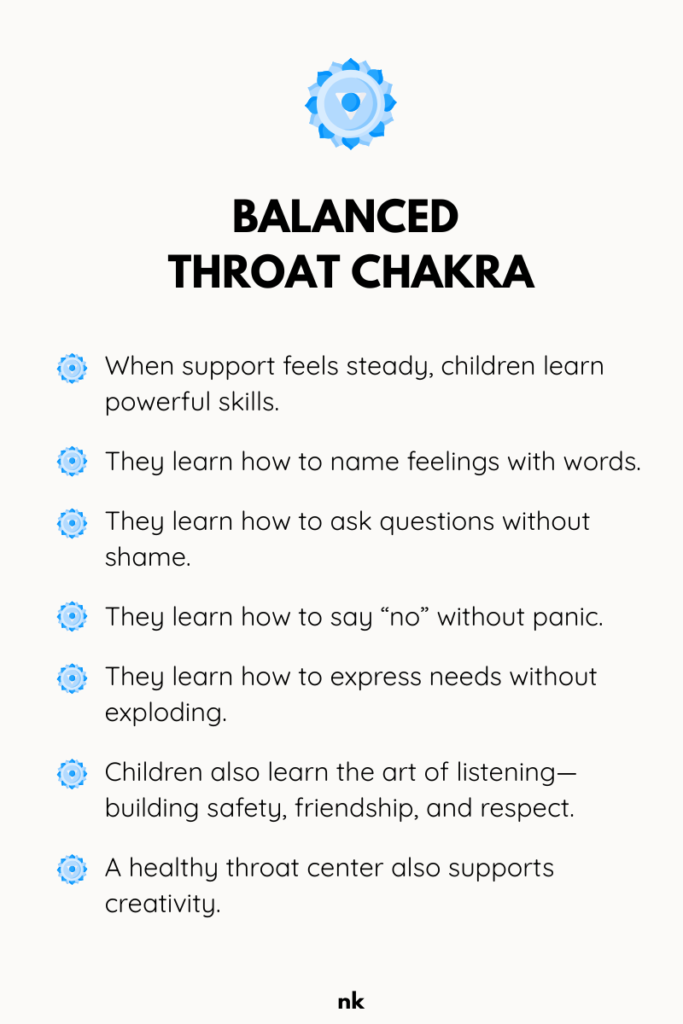
When support feels steady, children learn powerful skills.
They learn how to name feelings with words. They learn how to ask questions without shame. They learn how to say “no” without panic. They learn how to express needs without exploding.
Children also learn the art of listening. Listening builds safety, friendship, and respect. Kids start noticing tone, timing, and body language. They begin reading the room.
A healthy throat center also supports creativity. Children enjoy reading, singing, acting, and storytelling. They practice sharing ideas. They take healthy risks. They learn to recover after mistakes.
This creates a strong inner message: “My voice matters.”
It also creates another message: “I can speak and stay connected.”
Pain Points From Ages 7–12 That Can Block Expression
This stage can also hurt. Many children meet criticism more often now. They may face teasing, comparison, or bullying. They may feel pressure to perform. They may feel dismissed or interrupted.
Some kids live in homes where emotions feel unsafe. Some kids get punished for “talking back.” Some kids learn that honesty creates conflict. Others learn that silence avoids conflict. A child may start swallowing words to stay safe.
Common pain points include:
- Being laughed at when speaking.
- Feeling ignored at home or in school.
- Getting labeled “too sensitive” or “too much.”
- Being forced to keep secrets.
- Being corrected constantly.
- Feeling unsafe with authority figures.
These moments can create strong internal rules. The child may not think them. The child may become them.
How Coping Patterns Form: The Good, the Not-So-Good
Children adapt with intelligence. They choose strategies that reduce pain.
Some children become very agreeable. They say what others want. They avoid conflict. They become peacemakers. This can look mature. It can also hide fear.
Some children become loud. They interrupt. They dominate. They use volume for safety. Under the noise, they may feel powerless.
Some children become invisible. They stop raising their hand. They stop sharing opinions. They hold back even when they know the answer. They keep the peace by shrinking.
Some children use “performing” as protection. They become funny, charming, or impressive. They learn to earn approval with words. They may lose touch with authenticity.
Each pattern makes sense at the time. Each one can also harden into adulthood. Do any of these resonate with you?
Throat Chakra Patterns in Adults: How Childhood Becomes Your “Voice Story”
As an adult, you may still live by old rules.
You may fear speaking in meetings. You may over-explain to avoid rejection. You may soften every request. You may say “it’s fine” when it is not fine.
You may also swing the other way. You may speak sharply when you feel unheard. You may argue to feel safe. You may correct others to stay in control.
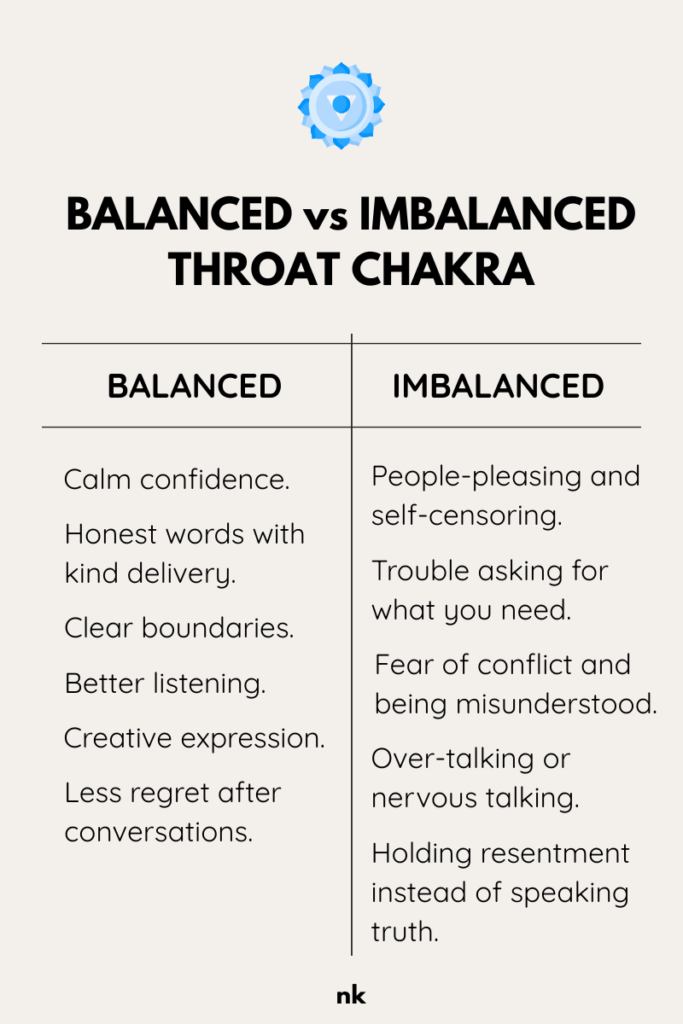
A blocked throat center often shows up as:
- People-pleasing and self-censoring.
- Trouble asking for what you need.
- Fear of conflict.
- Fear of being misunderstood.
- Over-talking or nervous talking.
- Holding resentment instead of speaking truth.
A balanced throat center often shows up as:
- Calm confidence.
- Honest words with kind delivery.
- Clear boundaries.
- Better listening.
- Creative expression.
- Less regret after conversations.
The Body Speaks Too: Throat-Area Clues
Your body often mirrors your communication habits.
Many people notice throat tightness during stress. Some notice jaw clenching. Some notice shallow breathing. Some notice a lump-in-the-throat feeling when emotions rise.
Please note: physical symptoms deserve medical attention when needed. Energy work supports wellness. It does not replace medical care. I truly believe in Western and Eastern medicines supporting one another.
Still, you can use the body as feedback. When your throat tightens, ask:
“What do I want to say right now?”
“What am I afraid will happen?”
“What truth needs a kinder outlet?”
This turns discomfort into guidance. It also builds trust in yourself.
Gentle Tools to Tune Into Your Throat Chakra
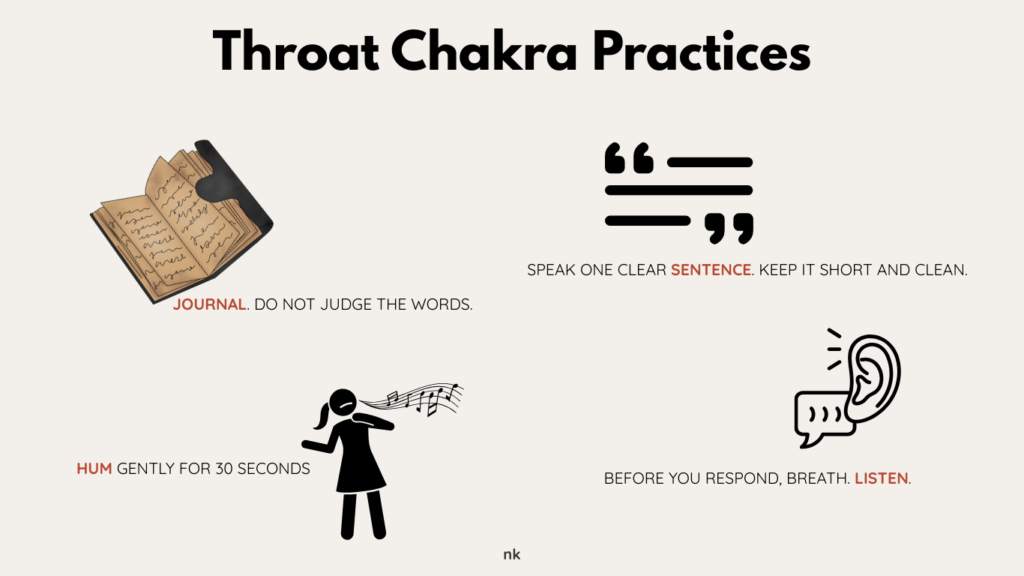
Try these practices for throat chakra healing and communication.
1) Two-Minute Truth Journaling
Set a timer for two minutes. Write without editing. Let the page hold your honesty. Do not judge the words.
Prompt ideas:
- “What I wish I could say is…”
- “What I keep swallowing is…”
- “The boundary I need is…”
2) Speak One Clear Sentence
Choose one small truth daily. Say it with kindness. Keep it short. Keep it clean.
Examples:
- “I need more time.”
- “That does not work for me.”
- “I feel hurt, and I want clarity.”
3) Listen Like It Matters
Before you respond, breathe once. Let the other person finish. Then reflect back one phrase. This builds connection fast.
4) Sound + Vibration
Hum gently for 30 seconds. Sing in the car. Read aloud. Vibration can soothe the throat space.
Where The Services I Offer Can Support Your Throat Chakra Healing
Sometimes willpower does not solve a pattern. Old emotion can run the script. The body can store stress. Beliefs can lock the throat.
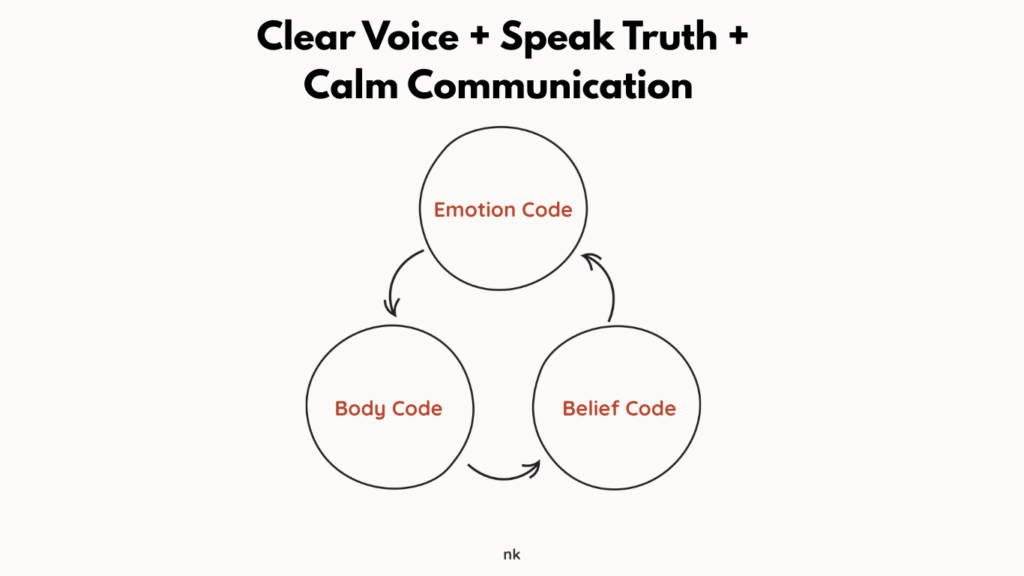
In the work I do, I support clients through three powerful modalities:
The Emotion Code®
This work helps locate and release trapped emotions. These emotions can fuel fear of speaking. They can also fuel shame and self-doubt. When we release them, many people feel lighter and calmer, and start using their voice.
The Body Code™
The Body Code helps identify imbalances linked to the throat area. We can explore connections across the body and energy system. That may include stress patterns, energetic circuits, and related systems that contribute to throat tension, including the throat chakra.
The Belief Code®
Beliefs can tighten your voice like a knot. Common ones include:
- “My needs do not matter.”
- “If I speak up, I will lose love.”
- “It is safer to stay quiet.”
The Belief Code work helps release beliefs that no longer serve you. It supports a new internal truth.
Together, these approaches can help you return to authentic voice and calm communication. They also support stronger boundaries and self-trust.
If you feel called, explore my services HERE and choose a session that fits you.
A Simple Weekly Plan for a Clearer Voice
Keep it gentle. Keep it consistent.
Day 1: Two-minute truth journaling.
Day 2: Practice one clear sentence.
Day 3: Hum for 30 seconds, then breathe deeply.
Day 4: Listen fully in one conversation.
Day 5: Name one boundary you need.
Day 6: Ask for one small thing directly.
Day 7: Reflect: “Where did I abandon my truth?”
Small steps create big change. Your nervous system learns safety through repetition.
Tiny Habits Recipe for the Throat Chakra: Use Your Voice With Ease
Your throat chakra strengthens through small, consistent actions. You do not need big breakthroughs to create change. You need gentle practice that teaches your body safety.
This is where Tiny Habits can support you.
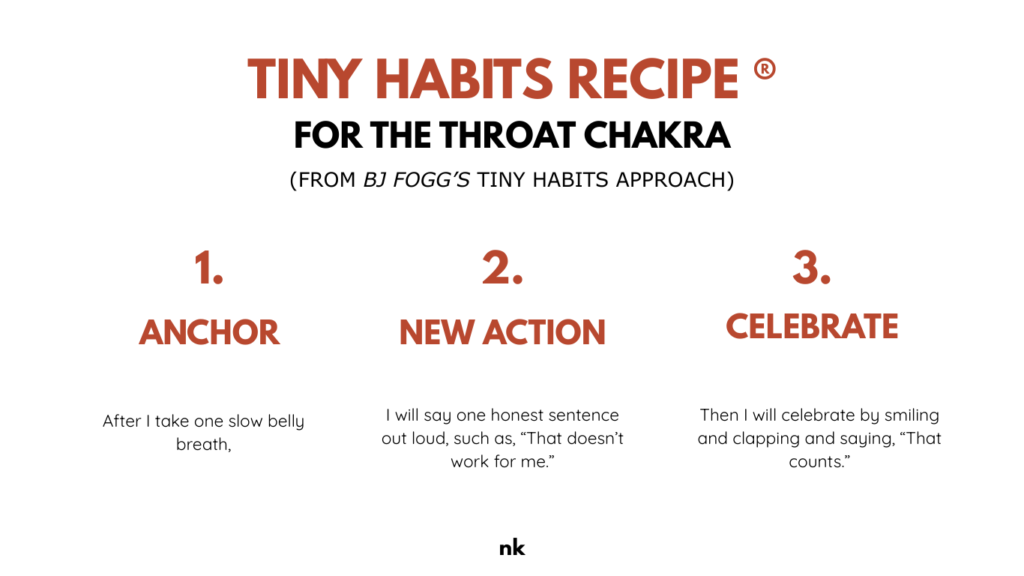
Tiny Habits Recipe: “Speak One Truth”
After I take one slow belly breath,
I will say one honest sentence out loud,
Then I will celebrate by smiling and saying, “That counts.”
This habit works because it is simple and repeatable.
It also trains your nervous system to stay calm while you express yourself.
Over time, your voice feels safer and more natural.
Try one of these truth sentences:
- “I need a moment.”
- “That doesn’t work for me.”
- “I feel uncomfortable with that.”
- “I want something different.”
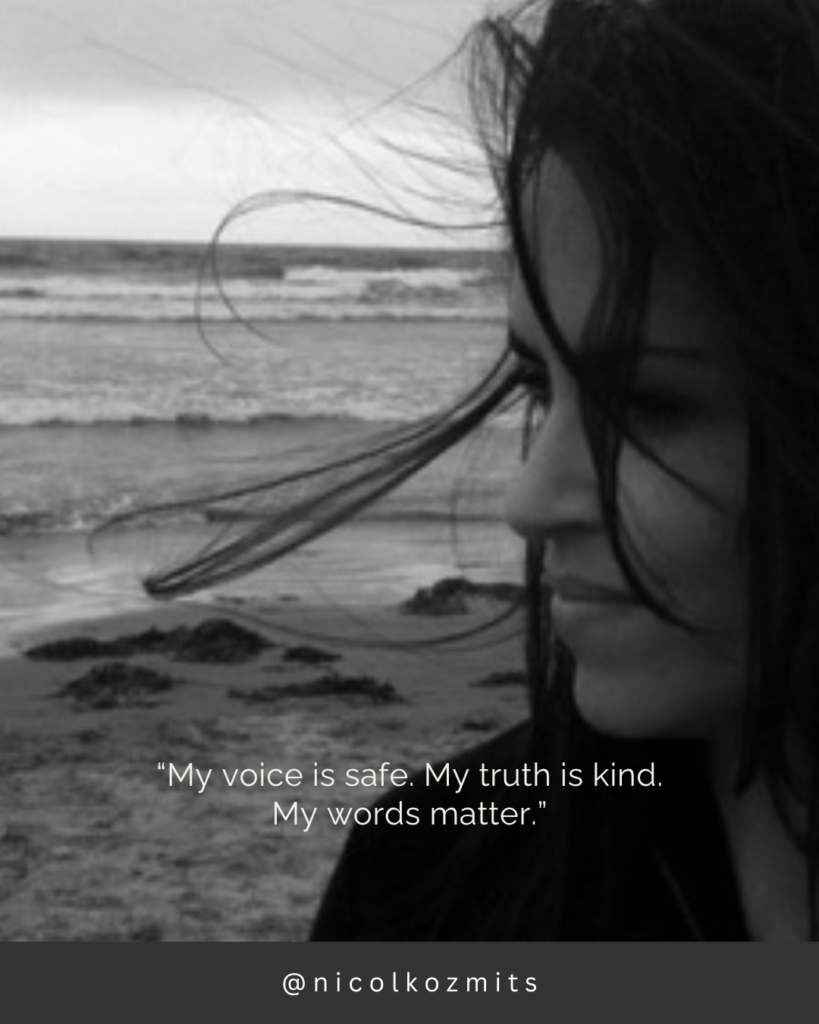
- “I’m allowed to speak up.”
Make It Even Easier (When You Feel Nervous)
If your body feels tight, start smaller.
Whisper your truth instead of saying it loudly.
Your voice still counts.
Your healing still counts.
Mini version:
After I place my hand on my throat,
I will whisper, “My voice matters,”
Then I will celebrate by relaxing my shoulders.
Closing: Your Voice Deserves a Safe Home
Your throat chakra holds more than words. It holds identity. It holds truth. It holds connection.
As Anodea Judith teaches in Eastern Body, Western Mind, this chakra develops through real-life expression. Ages 7–12 can strengthen it. Or they can teach self-silencing. Either way, healing stays possible.
You can rebuild trust in your voice. You can learn to speak clearly without force. You can listen without losing yourself. You can tell the truth with warmth.
If you want support, I would love to help you. You do not need to push through this alone. You can return to your voice one honest sentence at a time.
XO!