Have you ever stopped to think about what your body is actually made of?
At first, the answer seems simple. We are made of skin, bones, muscles, organs, blood, and cells. All of those things are matter.
Yet, when we look deeper, the conversation becomes much more interesting.
Our bodies also depend on electrical signals, chemical messages, movement, heat, light, and countless exchanges of information. Your heart beats through electrical activity. Your brain communicates through electrical and chemical signals. Your cells constantly respond to their surroundings.
So, where does matter end and energy begin?
That question has fascinated scientists, physicians, researchers, philosophers, and healers for generations.
Authors such as Dr. Bruce Lipton and the late neuroscientist and pharmacologist Dr. Candace Pert helped bring this conversation into the mind-body space. Their work encourages us to look beyond the body as a collection of separate parts.
Instead, we can begin to see ourselves as complex, interconnected human beings.
Understanding this distinction may also make energy healing feel less mysterious.
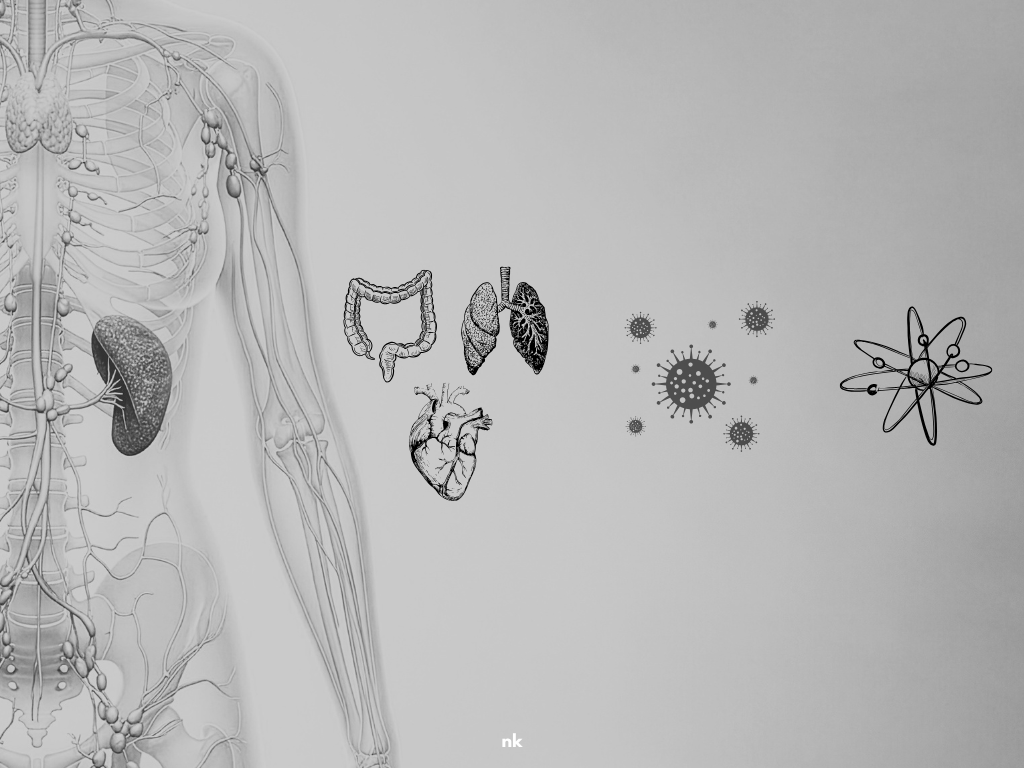
What Is Matter?
Matter is the physical substance that makes up the world around us.
Your bones, your muscles, your brain, organs, tissues, and cells are all matter.
NASA defines matter as substance that occupies space and has mass. Modern physics also tells us that mass and energy have a relationship. Einstein expressed that relationship through his famous equation, E = mc².
Scientists can observe that relationship under very specific conditions.
For example, nuclear fusion converts a small amount of mass into energy. Particle accelerators can also use tremendous amounts of energy to create new particles of matter.
That does not mean your coffee cup, body, thoughts, and emotions are interchangeable forms of energy in the everyday sense.
Physics is more precise than that.
However, it does show us something fascinating. Matter and energy are not completely unrelated categories.
Nature is much more interconnected than it may appear.
What Is Energy?
Energy can be harder to visualize because we cannot always hold it in our hands.
In physics, energy describes the capacity of a system to cause change or perform work. Energy appears in many measurable forms, including thermal, electrical, chemical, kinetic, and electromagnetic energy.
Your body uses several of these forms every moment.
Food provides chemical energy. Your nervous system uses electrical activity. Muscles transform chemical energy into movement. Your body gives off heat.
Even the electrical activity of your heart and brain can be measured.
This is where I believe our language matters.
We do not need to claim that physics has proven every concept within energy healing. It has not.
Instead, we can recognize something science clearly demonstrates: the human body is dynamic, responsive, and constantly exchanging information.
That alone invites us to think differently about healing.
Bruce Lipton: Looking Beyond the Idea That Genes Control Everything
Dr. Bruce Lipton has helped popularize another important idea: our biology responds to its environment.
In The Biology of Belief, Lipton discusses epigenetics and the relationship between our environment, perceptions, cellular activity, and gene expression. His work encourages readers to question the old idea that genes alone determine our destiny.
Mainstream epigenetics supports an important part of this broader conversation.
Researchers know that environmental and lifestyle factors can influence gene expression through epigenetic mechanisms. Stress also interacts with biological processes that affect gene regulation.
That does not mean thinking one positive thought can instantly rewrite your DNA. Our biology is far more complex.
However, it does mean our internal and external environments matter.
Sleep matters.
Stress matters.
Nutrition matters.
Relationships matter.
Movement matters.
Our ongoing emotional experiences may matter too.
This knowledge gives us another reason to support the whole person rather than focusing only on an isolated symptom.
Candace Pert and the Molecules of Emotion
This is where Dr. Candace Pert’s work becomes especially meaningful.
Pert was a neuroscientist and pharmacologist whose research explored neuropeptides and their receptors.
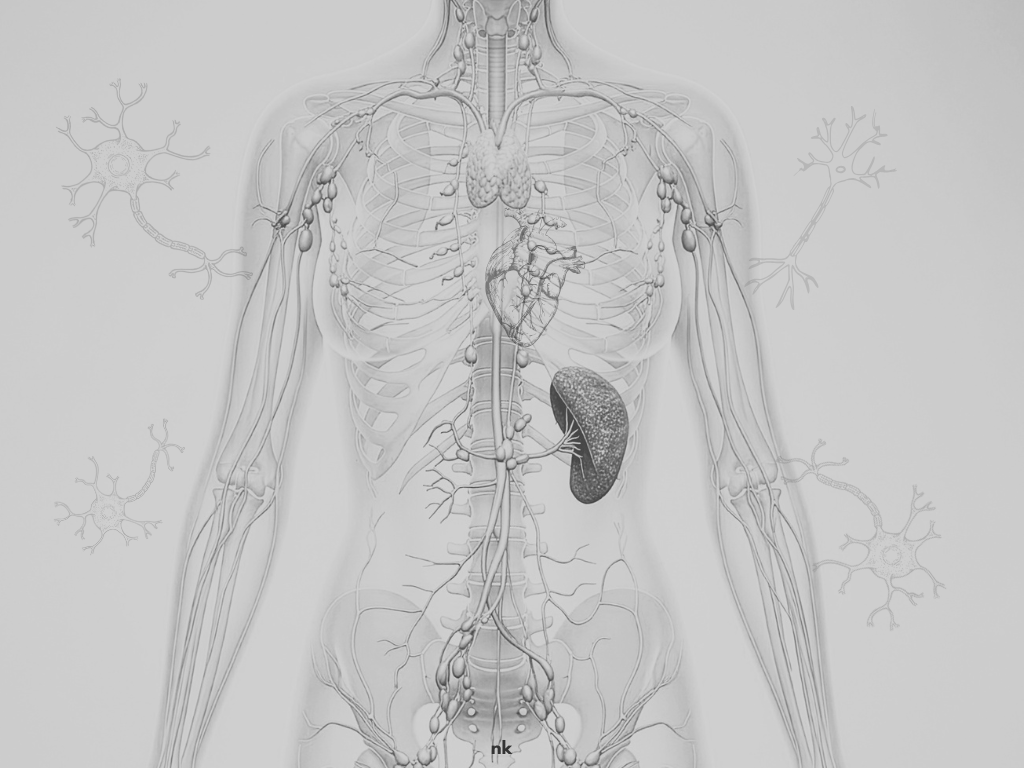
Her research helped describe a communication network that extends beyond the brain. Neuropeptide receptors appear throughout areas associated with emotion, glands, immune cells, and other tissues. Researchers proposed that this network helps connect the brain, body, immune system, and emotional experience.
Think about how profound that is.
An emotion is not necessarily something that happens only “in your head.”
Your emotional experience involves your body.
Most of us already recognize this intuitively.
Fear may tighten your stomach.
Embarrassment can warm your face.
Grief may feel heavy in your chest.
Anxiety can change your breathing.
Excitement can increase your heart rate.
Pert’s work helped expand the scientific conversation about these mind-body connections.
It also gives us a useful framework for asking a different question.
Instead of asking, “Is this physical or emotional?”
Perhaps we can ask, “How might my physical and emotional experiences be interacting?”
What Does Research Tell Us About the Mind-Body Connection?
Science continues to investigate these connections.
One systematic review examined gene-expression changes following practices such as meditation, yoga, Tai Chi, Qigong, relaxation, and breath regulation. Researchers found patterns suggesting these practices may influence biological pathways related to stress and inflammation. They also emphasized the need for continued research.
A 2025 systematic review and meta-analysis examined 89 randomized controlled trials involving mind-body interventions. Researchers studied immune and neuroendocrine functions, including pathways connected with chronic stress.
These studies do not prove The Emotion Code®, Body Code™, or Belief Code®.
I think that distinction is important.
Rather, they demonstrate that mental, emotional, and physiological processes interact in measurable ways.
Research into biofield therapies also continues.
A large scoping review published in 2025 identified 353 human intervention studies, including 255 randomized controlled trials. Researchers examined practices such as Reiki, Therapeutic Touch, Healing Touch, Qigong, and distant healing.
The existence of research does not mean every question has an answer.
Earlier reviews have pointed to methodological limitations, inconsistent findings, and the need for stronger studies.
For me, this is where curiosity becomes important.
We can remain open without pretending to know more than science currently knows.
Where Energy Healing Enters the Conversation
Energy healing takes a different approach from conventional medical care.
It does not need to replace your physician, therapist, medication, physical therapy, or other appropriate care.
Instead, I view it as a complementary way to explore the emotional and energetic patterns that may accompany your experiences.
Dr. Bradley Nelson developed The Emotion Code®, Body Code™, and Belief Code® around this philosophy.
His methods use muscle testing as a way of asking yes-or-no questions while exploring information believed to exist within the subconscious mind.
Discover Healing describes these methods as tools for identifying and releasing energetic imbalances.
I use these methods in my own practice because they provide a structured way to explore patterns beneath the surface.
The Emotion Code: Exploring Emotional Energy
The Emotion Code focuses primarily on what Dr. Nelson calls Trapped Emotions™.
His premise suggests that emotional experiences may sometimes leave behind energetic imbalances.
During a session, we use muscle testing to identify an emotion, rather than requiring you to consciously analyze every past experience.
The Discover Healing method then uses intention and the governing meridian as part of its release process.
Clients often appreciate this gentle approach because they do not necessarily need to tell their entire story.
Perhaps you already understand the situation intellectually.
You may even have talked about it many times.
Yet, something still feels unresolved.
The Emotion Code gives us another avenue to explore.
The Body Code: Looking at the Whole System
The Body Code expands beyond emotional energy.
Its framework organizes possible energetic imbalances into six main categories involving energy, body systems, toxins, pathogens, structural misalignments, and nutrition or lifestyle factors.
Again, this is not medical diagnosis.
I am not using the Body Code to determine whether you have a disease or medical condition.
Instead, we are exploring the body’s energetic framework through Dr. Nelson’s system.
This approach fits beautifully into our conversation about matter and energy.
Your physical body does not operate as disconnected pieces.
Muscles interact with nerves.
Hormones communicate with organs.
Emotions influence stress responses.
Sleep affects mood.
Nutrition affects energy.
Relationships can affect your nervous system.
Everything works together.
The Body Code gives us a framework for exploring that bigger picture.
The Belief Code: What If a Belief Is Keeping the Door Closed?
The Belief Code takes this exploration even deeper.
This method focuses on subconscious belief systems.
Discover Healing defines beliefs as filters through which we view and experience life. The Belief Code explores layers that may include negative programs, limiting beliefs, faulty core beliefs, emotional material, and other subconscious patterns.
This may become especially interesting when someone feels resistant to energy healing.
Maybe you think:
This sounds too strange.
I have to understand everything before I try it.
Healing has to happen in one particular way.
If science cannot fully explain it yet, it cannot help me.
Those thoughts are not automatically faulty beliefs.
Healthy skepticism can serve us well.
You never need to force yourself to believe something that does not feel right.
However, sometimes a deeper belief creates fear around change itself.
Perhaps part of you wants to heal while another part fears what healing could mean.
You might wonder who you would become without an old story, wound, identity, or coping pattern.
The Belief Code may help us explore whether an unwanted subconscious belief feels incongruent with what you consciously want.
Discover Healing specifically teaches that conscious beliefs cannot simply be changed energetically. Their system also states that a person must desire the change.
I find that distinction incredibly important.
Your intention matters.
Energy work should never be about convincing you to believe something.
It can instead offer another way to explore what may be standing between you and the change you genuinely want.
You Don’t Have to Understand Everything Before You Begin
One of the most freeing ideas I can share is this:
You do not need to understand quantum physics to explore energy healing.
You also do not need to abandon critical thinking.
Curiosity and discernment can exist together.
Try noticing energy through everyday experiences.
1. Notice Your Body’s Responses
Think about someone you love.
What changes inside your body?
Now remember a stressful conversation.
Does your jaw tighten? Does your chest feel different? Does your breathing change?
Simply observe.
2. Pay Attention to Emotional Patterns
Ask yourself:
“Where do I feel this emotion in my body?”
You are not trying to diagnose anything.
You are building awareness.
3. Become Curious About Your Beliefs
When you notice a recurring pattern, ask:
“What would I need to believe for this reaction to make sense?”
Your first answer may surprise you.
4. Use Breath to Reconnect
Slow breathing offers a simple way to reconnect your attention with your body.
Spend one minute noticing your breath without trying to fix anything.
Awareness alone can become a powerful starting point.
5. Let Experience Come Before Certainty
You do not have to decide that energy healing is true or false before exploring it.
You can simply ask:
“Does this approach feel supportive for me?”
That question leaves room for your own experience.
Healing Is More Than Matter Alone
Your body is physical.
It is also constantly communicating.
Electrical activity, hormones, neurotransmitters, immune signals, thoughts, emotions, environmental inputs, and countless other processes work together every second.
Bruce Lipton invites us to consider how environment and perception interact with biology.
Candace Pert’s work reminds us that emotion involves communication throughout the body.
Dr. Bradley Nelson offers energetic frameworks for exploring emotions, imbalances, and subconscious beliefs.
These ideas do not all carry the same level of scientific evidence.
We should not pretend that they do.
Yet, together, they invite a meaningful question:
What happens when we begin treating ourselves as whole human beings rather than collections of separate parts?
For me, that is where this work becomes powerful.

Supporting Your Whole-Self Healing Journey
In my sessions, I use The Emotion Code®, Body Code™, and Belief Code® to help clients explore emotional and energetic patterns that may be ready for attention.
We may uncover a trapped emotional pattern.
The body may guide us toward another energetic imbalance.
A deeper subconscious belief may surface.
Every session can unfold differently.
My role is not to tell your body what is wrong with it.
Instead, I help facilitate a process designed to listen, explore, and identify what your subconscious may be ready to address.
This work does not promise to cure disease or replace medical or mental-health care.
Rather, it may provide another supportive tool within your larger healing journey.
You can remain curious.
You can ask questions.
You can keep what resonates.
Most importantly, you get to decide what healing looks like for you.
Sometimes understanding begins with science.
Sometimes it begins with experience.
Often, the most interesting discoveries happen when we remain open to both.
XO!
Nico’l