
Healing rarely follows one straight path.
Western medicine plays an essential role in healthcare. Medical professionals can diagnose conditions, provide emergency care, prescribe medications, perform procedures, and monitor serious health concerns. Holistic healing does not need to compete with that care. The practices discussed in this blog are complementary tools that may support your emotional, mental, physical, energetic, and spiritual wellness. They can work alongside appropriate medical and mental health treatment, rather than replacing it.
Within that complementary approach, you have many supportive options to explore.
You may begin with meditation and later feel drawn toward breathwork. You may benefit from therapy while also exploring energy healing. Someone else may find that movement, journaling, or affirmations help them reconnect with themselves.
There is more than one way to support your healing.
Holistic wellness recognizes that your emotional, physical, mental, energetic, and spiritual well-being often influence each other. Therefore, healing may require several tools rather than one perfect solution.
The goal is not to try everything at once. The goal is to discover which practices help you feel safer, clearer, and more connected.
Wanting to Heal May Be the First Step
Before exploring healing modalities, we must consider one important question:
Are you willing to heal, even if healing asks you to change?
Caroline Myss introduced the term woundology while exploring why people may unknowingly remain attached to their wounds. She describes woundology as identifying with pain so deeply that it begins shaping our relationships, choices, and sense of self.
This idea should never become another reason to judge yourself.
Your wounds may have helped you receive support, explain your struggles, or understand what happened to you. They may have also created a feeling of belonging with people who shared similar experiences.
Healing does not require you to deny your story. It asks you to consider whether the story still needs to direct your life.
You might gently ask:
- Who would I become without this wound controlling my choices?
- What might change if I no longer needed to prove my pain?
- Am I willing to receive support in a new way?
- Does part of me feel safer remaining where I am?
Wanting to heal does not mean you know how. It means you have opened the door.
From there, different tools may help you take the next step.
1. Meditation: Learning to Witness Your Inner World
Meditation teaches you to notice thoughts without automatically believing or following them.
Many people think they cannot meditate because their minds remain active. However, meditation does not require a silent mind. The practice involves noticing where your mind goes and gently returning to the present.
Over time, this awareness may help you recognize repeated fears, reactions, and emotional patterns. You begin creating space between what you feel and how you respond.
A systematic review and meta-analysis of meditation programs found that mindfulness meditation may provide small improvements in anxiety, depression, and pain. The researchers also noted that stronger studies remain necessary.
Meditation should support appropriate care rather than replace medical or mental health treatment.
Try This
Begin with three minutes.
Place one hand over your heart. Notice your breathing without changing it. When thoughts arise, say, “I notice this thought.” Then return to your breath.
Small, consistent practices often feel more manageable than forcing a long daily routine.

2. Breathwork: Using the Breath to Support Regulation
Your breathing changes when you feel frightened, rushed, or overwhelmed. It may become shallow, fast, or restricted.
Intentional breathing gives you a simple way to reconnect with your body and the present moment.
Breathwork includes many different techniques. Some feel calming, while others create a more intense physical or emotional experience. Beginners often benefit from slow, gentle breathing rather than rapid breathing or forceful breath holds.
A 2023 meta-analysis of randomized controlled breathwork studies found small-to-medium improvements in stress, anxiety, and depressive symptoms.
However, the researchers urged caution because the studies varied in quality and design.
Try This
Breathe in gently for four counts. Breathe out for six counts.
Repeat this pattern for one or two minutes. Stop if you feel dizzy, distressed, or uncomfortable.
People with respiratory, cardiovascular, psychiatric, or trauma-related concerns should seek professional guidance before trying intensive breathwork.
3. Reiki: Receiving Gentle Energetic Support
Reiki is a form of complementary energy healing. Practitioners generally place their hands lightly on the body or hold them slightly above it.
Many people use Reiki to support relaxation, emotional processing, and a sense of inner connection. Some people describe warmth, tingling, peacefulness, or deep rest during sessions.
You do not need to feel energy for the experience to hold personal value. You also do not need to understand everything about Reiki before exploring it.
Research on Reiki remains developing.
A 2024 systematic review and meta-analysis examining Reiki for anxiety reported encouraging results for some forms of health-related and procedural anxiety.
However, the findings were less consistent in certain groups. Reiki studies also differ in size, design, session length, and quality.
A separate 2025 meta-analysis of Reiki and quality of life reported potential benefits. The authors also acknowledged the need for continued research.
Reiki should complement qualified medical or mental health care. It should not replace diagnosis, medication, therapy, or emergency support.
4. Affirmations: Creating Language That Supports Change
Affirmations can help you examine the messages you repeatedly give yourself.
However, an affirmation should not force you to pretend that everything feels wonderful. A statement such as “I love every part of myself” may feel impossible when you are struggling.
Your subconscious mind may resist words that feel too far removed from your present experience.
Instead, create a bridge between your current experience and your desired direction.
You might say:
- I am learning to trust myself.
- I am open to feeling safer in my body.
- I can take one supportive step today.
- I am willing to consider a new possibility.
- I can honor my past without living inside it.
Scientific self-affirmation research usually focuses on reflecting upon meaningful personal values. It does not always study the repeated positive phrases commonly called affirmations.
One brain-imaging study of self-affirmation found activity in brain regions associated with self-related processing and personal value.
Another study of self-affirmation and health messages suggested that affirming important values may help people recognize the relevance of challenging health information.
Make Affirmations More Effective
Choose one statement that feels believable.
Repeat it slowly while breathing. Notice any discomfort, doubt, or inner argument that appears. That reaction may reveal a belief that needs compassionate attention.
Affirmations work best when your choices and actions begin supporting your words.
5. Mindful Movement: Reconnecting With Your Body
Healing does not always happen while sitting still.
Yoga, walking, stretching, dancing, and other forms of gentle movement may help you reconnect with your body. Movement can also provide an outlet for tension that feels difficult to express through words.
Mindful movement focuses less on performance and more on awareness.
What do you notice in your shoulders? Are you holding your breath? Does your body want more movement or more rest?
Your practice does not need to look impressive. Five minutes of stretching, swaying, or walking can become a meaningful act of self-connection.
Choose movements that feel safe and appropriate for your body. Seek professional guidance when pain, injury, balance concerns, or medical conditions affect your ability to exercise.

6. Journaling: Giving Your Inner Experience a Voice
Journaling helps you slow your thoughts enough to observe them.
You may notice patterns that remain hidden during a busy day. You may also discover unmet needs, unspoken anger, grief, hopes, or fears.
Journaling does not require perfect grammar or beautiful handwriting. It only requires honesty.
Julia Cameron’s The Artist’s Way offers a gentle entry point through her practice of “Morning Pages.” This involves writing three pages by hand without editing or judging what appears. For those who do not naturally enjoy journaling, the practice can reduce pressure and help thoughts begin to flow more freely.
Try writing from one of these prompts:
- What am I carrying that no longer belongs to me?
- What does my body need from me today?
- What belief keeps appearing in my decisions?
- What am I afraid healing might change?
- Where am I ready to choose differently?
- What would feeling lighter look like today?
You can also write from the perspective of your wiser self. Ask a question, pause, and then write the most loving response you can access.
Journaling does not replace therapy. However, it may help you organize what you want to discuss with a qualified professional.
7. The Emotion Code, Body Code, and Belief Code
Dr. Bradley Nelson developed The Emotion Code®, The Body Code™, and The Belief Code® as systems of energy healing.
These modalities use muscle testing to receive yes-or-no responses from the subconscious mind. Practitioners also use organized charts and mind maps to identify areas that may need energetic support.
According to Discover Healing’s comparison of The Emotion Code®, The Body Code™, and The Belief Code®, the three systems focus on trapped emotional energies, broader energetic imbalances, and unwanted beliefs.
These methods rest on the belief that restoring energetic balance may support the body’s natural healing processes. They are complementary wellness practices rather than medical diagnostic tools.
The Emotion Code®
The Emotion Code focuses on identifying and releasing trapped emotional energies.
A trapped emotion may develop during a stressful or emotional experience. The Emotion Code approach suggests that emotional energy can remain within the body after the event ends.
During a session, we use muscle testing and The Emotion Code Chart to identify the emotion and determine whether we need more information.
We may explore when the emotion occurred, whether it was inherited, or whether it became part of a Heart-Wall®.
Clients often explore this work when they feel emotionally stuck, reactive, guarded, or unable to move beyond a repeated pattern.
The Body Code™
The Body Code expands beyond trapped emotional energies.
It helps us explore six broad categories of potential imbalance. These include energies, circuits and systems, toxins, pathogens, misalignments, and nutrition or lifestyle factors.
Discover Healing offers a helpful explanation of how The Body Code differs from The Emotion Code and Belief Code.
The process does not diagnose disease. Instead, it offers an organized way to ask the subconscious mind what may need energetic support.
A Body Code session may uncover several layers. We follow the body’s priorities rather than trying to address everything at once.
The Belief Code®
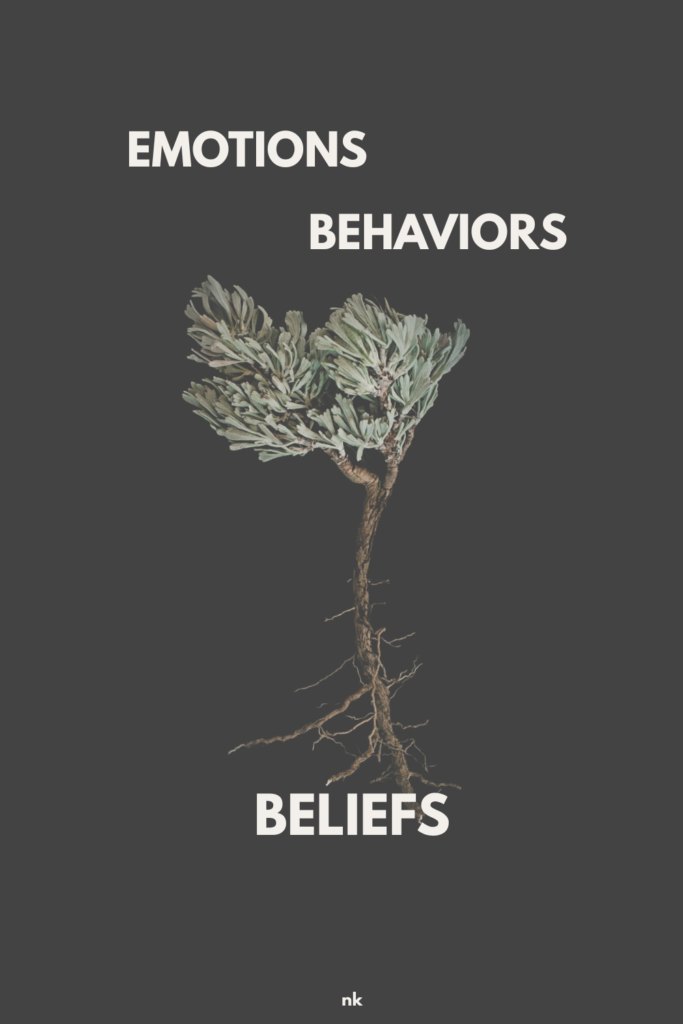
The Belief Code focuses on energetic patterns connected with unwanted beliefs and belief systems.
You may consciously want to explore energy healing while holding a deeper belief such as:
- Energy healing is unsafe.
- I cannot trust what I cannot see.
- Receiving support makes me weak.
- Healing will separate me from people I love.
- I do not deserve to feel better.
- Change is dangerous.
- Nothing will work for me.
According to Discover Healing’s explanation of what The Belief Code is and how it works, practitioners use muscle testing and structured mind maps to identify unwanted subconscious beliefs.
The process may also uncover related emotions, negative programs, images, or groups of connected beliefs.
Releasing an unwanted belief does not erase your memories or control your thinking. Instead, this work aims to create space for a more supportive perspective.
A shift in one belief may influence many parts of life.
For example, releasing “It is unsafe to be seen” could support more than your healing journey. It may also affect communication, relationships, career decisions, boundaries, and your willingness to share your gifts.
How to Choose the Right Holistic Healing Tool
You do not need to choose the modality that everyone else recommends.
Ask yourself:
- Do I need calm, expression, movement, insight, or support?
- Does this practice feel safe and manageable?
- Am I curious about it?
- Does the practitioner respect my boundaries?
- Can I combine this method with my existing care?
- Am I expecting support, or am I expecting a miracle?
Start with one practice. Give yourself enough time to observe how it affects you.
You might meditate for five minutes each morning. You might schedule an energy healing session and journal afterward. You might use affirmations while walking.
Healing tools can work together.
Healing Does Not Have to Look One Particular Way
Your healing journey belongs to you.
You do not need to follow someone else’s exact path. You also do not need to reject traditional care to explore holistic wellness.
The most supportive approach may include medical care, therapy, nourishing food, sleep, community, energy work, and spiritual practices. Each tool can serve a different purpose.
Most importantly, healing asks for your participation.
You do not need complete confidence. You only need enough willingness to take the next compassionate step.
How I May Support Your Healing Journey
As a certified Emotion Code®, Body Code™, and Belief Code® practitioner, I offer personalized sessions that explore trapped emotions, energetic imbalances, and unwanted subconscious beliefs.
Together, we follow your body’s priorities through muscle testing. We approach each session with curiosity rather than judgment.
This work may help you explore what has kept you feeling stuck and create space for greater clarity, balance, and emotional freedom.
Healing does not mean becoming someone else.
It may mean releasing what no longer feels like you, so life can feel lighter, brighter, and more manageable.
Energy healing supports wellness and does not diagnose, treat, or cure disease. Please continue working with qualified healthcare professionals for medical or mental health concerns.
And remember, sessions may occur remotely on a laptop, from the comfort of your own space.
XO,
Nico’l