
Perspective is the lens you look through.
It is not always the truth.
It is the meaning you give to what happened, what is happening, and what you believe may happen next.
One person may see a closed door and think, “I am being rejected.” Another may think, “I am being redirected.” The situation may look the same on the outside. Yet the body may respond very differently inside.
That is why perspective matters so much in healing.
Your perspective can soften your nervous system. It can help your body feel safe. It can open your mind to a new possibility. It can also keep you stuck in fear, resentment, hopelessness, or survival mode.
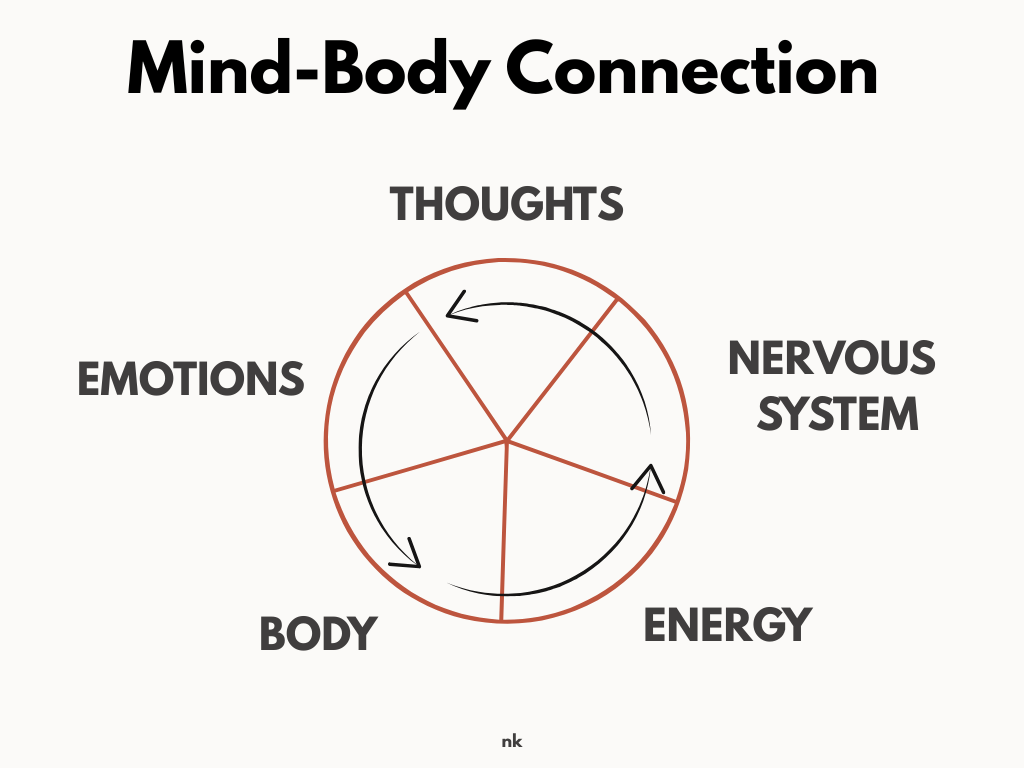
This does not mean your pain is “all in your head.” It does not mean you caused your illness or struggle. It means your mind, body, emotions, energy, and beliefs communicate all day long.
Healing often begins when we ask a gentle question:
“Is there another way to see this?”

What Is Perspective?
Perspective means the way you interpret something.
It includes your thoughts, emotions, beliefs, memories, expectations, and past experiences.
Merriam-Webster defines perspective as a “mental view or prospect,” which fits beautifully here. Your perspective becomes the inner place you stand when you look at life.
For example, you may think:
“I always get sick.”
“My body has betrayed me.”
“Nothing works for me.”
“I am too far gone.”
“I have tried everything.”
These thoughts may feel true because your body carries history. You may have lived through pain, trauma, disappointment, or years of unanswered symptoms.
Yet your body also listens.
When your inner story stays rooted in fear, your system may stay guarded. When your perspective shifts toward curiosity, your system may begin to soften.
A more healing perspective may sound like:
“My body is trying to communicate with me.”
“I can support my healing one step at a time.”
“Something deeper may need attention.”
“I am open to seeing this differently.”
“I do not need to force healing. I can partner with it.”
That shift may look small.
Yet small shifts can create powerful openings.
How Perspective Affects the Body
Your body responds to the meaning you give your experiences.
When you believe you are unsafe, unsupported, unseen, or trapped, your nervous system may react. You may tighten your shoulders. Your digestion may slow. Your breathing may become shallow. Your sleep may suffer.
Stress research continues to show how closely emotional regulation, mindset, and health connect.
A 2017 study on cognitive reappraisal and acceptance found that both strategies relate to better psychological health over time. Cognitive reappraisal means you reinterpret a situation in a new way. In simple terms, you practice changing your perspective.
This matters because the body does not only respond to what happened. It also responds to what you believe it means.
If you see a symptom as proof that your body has failed, fear may increase. If you see a symptom as a message, you may feel more empowered.
That does not replace medical care. It adds another layer of support.
Perspective helps you move from “What is wrong with me?” to “What is my body asking me to notice?”
That one question can change the energy of healing.
Optimism, Meaning, and Health
Perspective does not require toxic positivity. You do not need to pretend everything feels wonderful.
A healthy perspective tells the truth, while leaving room for possibility.
Research has explored the relationship between optimism and physical health. A 2019 meta-analysis found that optimism was associated with a lower risk of cardiovascular events and all-cause mortality.
This does not mean optimism cures everything. It means your inner orientation matters.
Another important area is meaning-making. When people face chronic illness, trauma, grief, or pain, they often need to make meaning from the experience. Studies on chronic illness and meaning-making suggest that finding meaning can support adjustment and well-being.
In healing work, meaning matters because it changes your relationship with pain. Pain may still exist. Yet it may no longer define you.
You may begin to ask:
“What is this teaching me?”
“What belief has this revealed?”
“What boundary needs attention?”
“What emotion has been waiting for care?”
“What part of me needs compassion?”
These questions do not shame the body.
They invite the body into conversation.
Psychological Flexibility: The Healing Power of “Maybe”
Psychological flexibility means you can adapt your thoughts and actions.
You do not stay locked into one story.
You can feel pain and still choose care. You can feel fear and still take one gentle step. You can notice an old belief and still open to a new one.
A well-cited review described psychological flexibility as an important part of health. It connects flexibility with healthier outcomes and greater well-being.
This is why the word “maybe” can help.
Maybe my body is not against me.
Maybe this pattern started earlier than I realized.
Maybe this belief is inherited, absorbed, or learned.
Maybe my symptoms carry emotional information.
Maybe I can heal in layers.
Maybe I do not need to know everything today.
“Maybe” creates space. And space allows healing to move.
Wisdom From Authors We Have Used Before
Many of the authors we have discussed in past blogs point toward the same truth:
The way we see ourselves shapes how we heal.
Dr. Bradley Nelson, founder of The Emotion Code®, The Body Code™, and The Belief Code®, teaches that trapped emotions, energetic imbalances, and faulty beliefs may affect emotional and physical balance. Discover Healing describes these methods as non-invasive tools that help locate and release trapped energies, imbalances, and faulty beliefs.
Caroline Myss often invites readers to look at the stories they carry around wounds. Her work reminds us that healing asks for honesty. We must notice where pain has become identity, power, protection, or a familiar way to belong.
Anodea Judith’s chakra work also helps us understand perspective. Each chakra holds a developmental lens. The Root asks, “Am I safe?” The Sacral asks, “Can I feel?” The Solar Plexus asks, “Do I have power?” The Heart asks, “Can I love and receive love?” Each lens can shape how we see life.
Bruce Lipton’s work, especially The Biology of Belief, invites us to explore how perception and belief may influence biology. Hay House’s description of his book highlights his message that changing perceptions can change how we relate to health and life.
These authors do not all use the same language. Yet they all point toward one powerful idea:
Your inner lens matters.
When Perspective Keeps You Stuck
Sometimes, perspective protects you before it limits you.
If you were hurt, your mind may have formed a belief like:
“I cannot trust anyone.”
“I must do everything myself.”
“It is not safe to rest.”
“I have to stay in control.”
“My needs do not matter.”
These beliefs may have helped you survive. Yet later, they may affect your body, relationships, choices, and healing.
For example, if you believe rest is lazy, you may push through exhaustion.
If you believe asking for help is weakness, you may carry too much alone.
If you believe your body cannot heal, you may stop listening to it.
If you believe emotions are dangerous, you may suppress them.
Suppressed emotions do not always disappear.
They may show up as tension, fatigue, reactivity, resentment, or disconnection. This is where energy healing can help. It gives us a gentle way to ask the body and subconscious mind what still needs support.

How Energy Healing Helps Shift Perspective
Energy healing works with the idea that emotions, beliefs, and imbalances can create stress within the body’s energy system.
For someone new to this work, that may sound unfamiliar.
So let’s make it simple.
Think of a trapped emotion as emotional residue. Something happened. You felt it. Your body did not fully process it. The energy stayed.
Think of an imbalance as an area where the body may need support. It could involve organs, systems, circuits, toxicity, nutrition, pathogens, structural stress, or emotional energy.
Think of a belief system as a subconscious program. It may quietly shape your choices, reactions, relationships, and healing expectations.
The Emotion Code®, The Body Code™, and The Belief Code® all use muscle testing to help communicate with the subconscious mind. Discover Healing explains that these methods rely on muscle testing and aim to locate trapped energies, imbalances, and faulty beliefs.
This is not about forcing your mind to “think positive.” It is about finding what your system has stored.
When that energy shifts, your perspective may shift too. You may feel lighter. You may see an old situation differently. You may feel less emotionally charged. You may notice more compassion toward yourself.
That is often where healing begins.
The Emotion Code: Releasing the Emotional Lens
The Emotion Code focuses on trapped emotions.
These emotions may come from your own experiences. They may also be inherited, absorbed, prenatal, or connected to earlier life stages.
A trapped emotion can become a lens.
For example:
Trapped fear may make the future feel unsafe.
Trapped grief may make joy feel distant.
Trapped resentment may make forgiveness feel impossible.
Trapped shame may make self-care feel undeserved.
When these emotions are released, people often notice a change in how they feel about themselves or others. The situation may not change. Yet the emotional charge may soften.
That softening can create a new perspective.
The Body Code: Looking Beneath the Symptom
The Body Code takes a broader look at energetic imbalances.
It can help explore physical, emotional, energetic, nutritional, structural, and lifestyle-related stressors.
This does not replace medical care or diagnosis.
Instead, it helps ask a deeper question:
“What imbalance may be contributing to this pattern?”
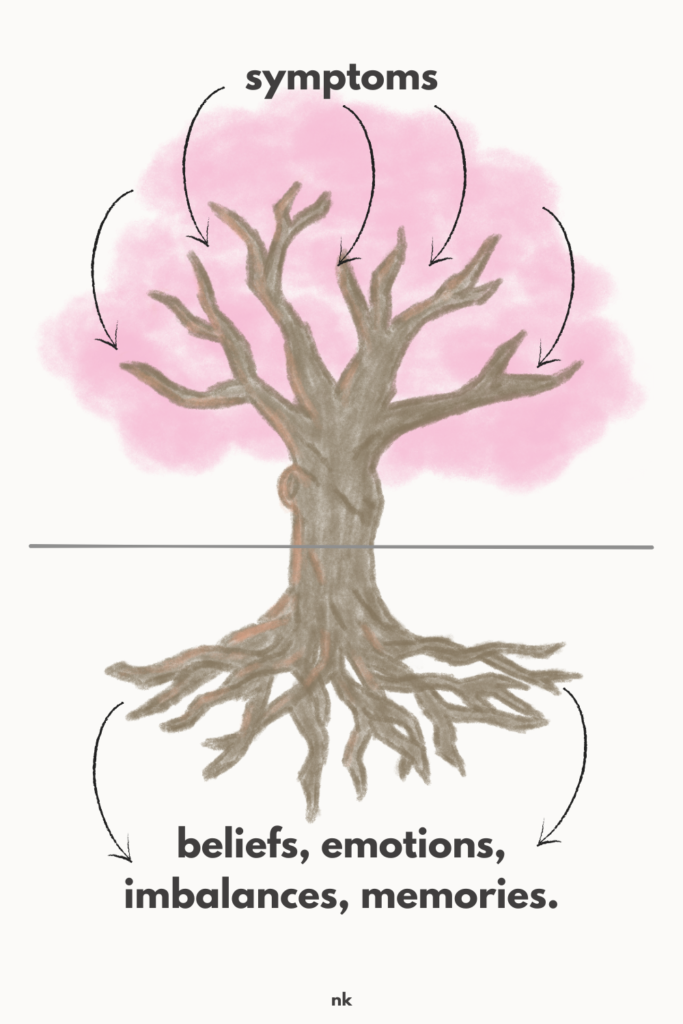
Sometimes a person feels stuck because they only see the symptom.
The Body Code helps look beneath the surface.
A headache may connect with stress, dehydration, trapped emotion, energetic imbalance, structural tension, or another root issue. Fatigue may involve emotional overwhelm, nutritional imbalance, sleep patterns, or subconscious beliefs.
When we look deeper, perspective changes.
The body stops looking like the enemy.
It becomes a messenger.
The Belief Code: Changing the Story Beneath the Story
The Belief Code helps identify unwanted subconscious beliefs.
Discover Healing describes The Belief Code as a method that helps unearth unwanted subconscious beliefs and free the mind, body, and spirit.
Beliefs shape perspective more than we realize.
You may consciously say:
“I want to heal.”
Yet the subconscious may hold:
“Healing is not safe.”
“I do not deserve support.”
“If I heal, I will lose connection.”
“My pain gives me identity.”
“Nothing ever works for me.”
These beliefs can create inner conflict. Part of you wants change. Another part protects the old pattern.
The Belief Code helps bring these hidden beliefs into the light. Once identified, they can be released or replaced.
This can create a profound shift in perspective.
You may stop asking, “Why am I stuck?”
You may start asking, “What belief kept me here?”
That question carries hope.
A Gentle Perspective Practice
Try this simple practice when you feel stuck.
Place one hand over your heart.
Take one slow breath.
Ask yourself:
“What perspective am I holding right now?”
Then ask:
“Is this perspective helping my body feel safe?”
Then ask:
“What is one kinder way to see this?”
You do not need to force an answer.
Let your body respond.
You may hear:
“I am doing the best I can.”
“My body needs support, not criticism.”
“This pattern may have started long ago.”
“I can take one small step today.”
“This may shift in layers.”
That is enough.
Healing often begins with one honest, compassionate thought.
Tiny Habits Recipe for Perspective
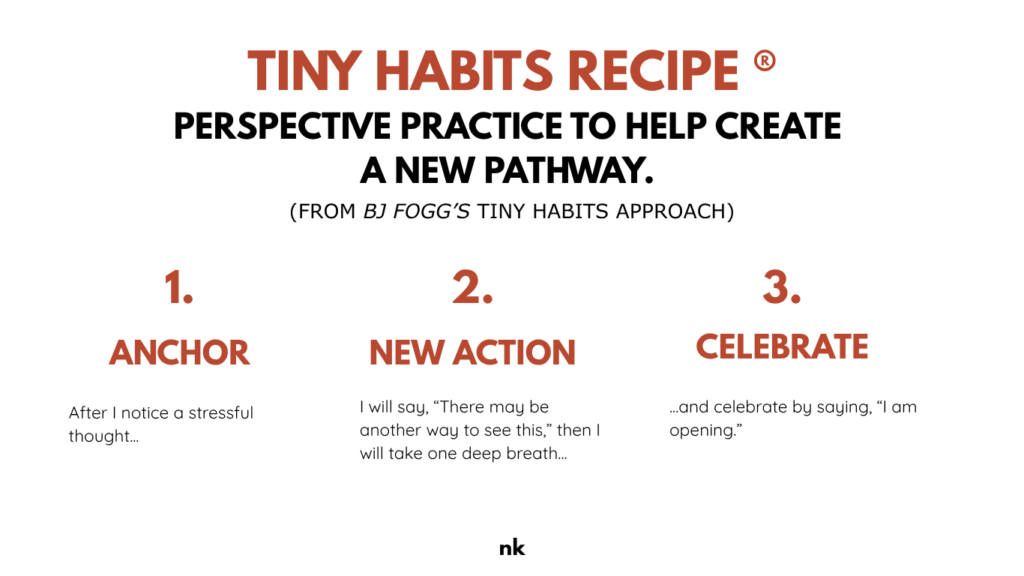
Here is a simple Tiny Habits recipe inspired by BJ Fogg’s method:
After I notice a stressful thought, I will say, “There may be another way to see this,” then I will take one deep breath and celebrate by saying, “I am opening.”
This practice helps create a new pathway.
It does not deny your pain. It gives your nervous system another option.
Over time, your body may begin to associate reflection with safety.
That matters.
Safety supports healing.
Final Thoughts: Perspective Opens the Door
Perspective can tighten the body. Perspective can also soften it.
It can keep you in an old identity. It can also help you become curious, open, and willing.
You do not need to change your entire life in one day. You only need one small opening.
One softer thought.
One honest question.
One willingness to see yourself with more compassion.
The Emotion Code, The Body Code, and The Belief Code can help identify trapped emotions, energetic imbalances, and deep-rooted beliefs that may shape your perspective. When these hidden layers release, you may begin to feel more connected to yourself, your body, and your healing path.
If you feel stuck, discouraged, or unsure why healing feels hard, your body may not need judgment.
It may need support.
It may need safety.
It may need a new perspective.
And sometimes, that new perspective begins with this truth:
Your body is not against you. It may be asking you to listen differently.
XO!
Nico’l



One Response