
For many people, the words energy healing inspire curiosity. For others, they raise understandable questions.
How does energy healing work? Can science measure it? Is it a spiritual practice, a wellness tool, or both? Most importantly, can it offer meaningful support in everyday life?
These questions deserve thoughtful answers. You should never feel pressured to accept a healing approach without exploring it first.
Energy healing remains an emerging area of research. Scientists have not confirmed every theory used to explain it. However, researchers have studied several biofield-based practices, including Reiki, Healing Touch, and Therapeutic Touch.
Some findings suggest potential benefits for stress, discomfort, anxiety, relaxation, and emotional well-being. Other findings remain mixed or limited. This developing research invites curiosity rather than certainty.
This post is inspired by Discover Healing’s discussion of the science behind energy healing; their article explores what we currently know. It also explains how Dr. Bradley Nelson’s methods may support your personal, professional, and leadership journey.

What Do We Mean by Energy?
Energy may sound like an abstract word, but your body constantly produces measurable electrical activity.
An electrocardiogram measures electrical activity in the heart. An electroencephalogram measures electrical activity in the brain. Your nervous system also uses electrical and chemical signals to communicate throughout your body.
These accepted measurements do not automatically prove every claim made about energy healing. However, they remind us that the human body involves more than bones, muscles, and organs. It also relies on communication, movement, electrical activity, chemical reactions, and interconnected systems.
Energy healing approaches often work from the belief that emotional experiences may affect these interconnected systems. A practitioner does not diagnose disease or replace medical treatment. Instead, the practitioner seeks to identify patterns or imbalances that may affect emotional or physical well-being.
Researchers often group Reiki, Healing Touch, Therapeutic Touch, and similar methods under the term biofield therapies. The term biofield was proposed by a committee of practitioners and researchers convened by the National Institutes of Health’s Office of Alternative Medicine in 1992. The committee described it as a proposed field that surrounds and permeates living bodies. Later researchers expanded the concept to include possible energy and information processes within living systems. However, scientists have not confirmed the existence or proposed healing role of such a field. You can learn more through this NIH-hosted review of biofield history and terminology and the NIH’s current overview of Reiki.
Science has not fully explained how these therapies might work. That uncertainty does not mean researchers have ignored them.
What Does the Research Say About Biofield Therapies?
A 2010 evidence review published in the International Journal of Behavioral Medicine examined 66 clinical studies of biofield therapies.
The reviewers found stronger evidence for reduced pain intensity in certain pain populations. They also found moderate evidence for reduced anxiety among hospitalized patients. However, they called for larger, higher-quality studies.
A later systematic review of non-touch biofield therapies evaluated randomized controlled trials involving Reiki, Healing Touch, Therapeutic Touch, external qigong, and Johrei.
Of the higher-quality trials included in the review, two-thirds reported at least one statistically significant beneficial outcome. The researchers also warned that small samples and inconsistent study designs prevented firm conclusions.
More recently, a 2025 scoping review and evidence map identified 353 biofield therapy studies. These included 255 randomized controlled trials.
Nearly half reported positive results across all outcomes studied. Others produced mixed, nonsignificant, or unclear findings. The review demonstrates growing scientific interest, while also showing the need for consistent research standards.
Together, these reviews do not prove that every person will experience a benefit. They do show that energy-based practices deserve careful, continued investigation.
Energy Healing, Stress, and the Professional World
People in leadership roles often place their well-being last.
They manage deadlines, decisions, employees, customers, financial demands, and family responsibilities. They may believe that slowing down will reduce their productivity. Some wait until exhaustion, anxiety, discomfort, or burnout forces them to pay attention.
This pattern can create a difficult cycle. A leader may keep functioning outwardly while feeling overwhelmed inwardly. The body may remain tense even after the workday ends. Sleep may suffer. Creativity may decline. Small problems may start feeling much larger.
Research into energy therapies within professional settings remains limited. However, early findings provide reasons for further study.
One workplace study involving nurses at a large United States hospital found that stress scores, heart rate, and breathing rate decreased immediately after 30-minute Reiki sessions.
A randomized controlled trial involving healthcare professionals with burnout also examined Reiki’s immediate effects on physiological measurements, including heart-rate variability and cortisol.
Another randomized, single-blind study examined distant Reiki for nurses working in COVID-19 clinics. Researchers reported reductions in stress and fatigue following the intervention.
These studies remain small and focus primarily on healthcare professionals. Therefore, we should not generalize their findings to every workplace. Still, they suggest that supportive energy practices may deserve a place within broader workplace wellness discussions.

Why Leaders May Resist Energy Healing
Many professionals build their success through logic, preparation, analysis, and action. Those strengths matter. However, they may also create resistance toward anything that cannot yet be explained completely.
A leader may privately think:
I need stronger proof.
I cannot afford to slow down.
This sounds too spiritual for me.
People might judge me.
My stress is simply part of the job.
These thoughts may feel rational. Some may also come from deeper subconscious beliefs.
Perhaps you learned that rest equals laziness. You may believe that strong people handle everything alone. You might associate emotional exploration with weakness. You may even feel unsafe trying something unfamiliar.
You do not need to abandon critical thinking to explore energy healing. Healthy curiosity allows you to ask questions, review available research, set boundaries, and notice your own experience.
The goal is not blind belief. The goal is openness without pressure.
Dr. Bradley Nelson’s Energy Healing Methods
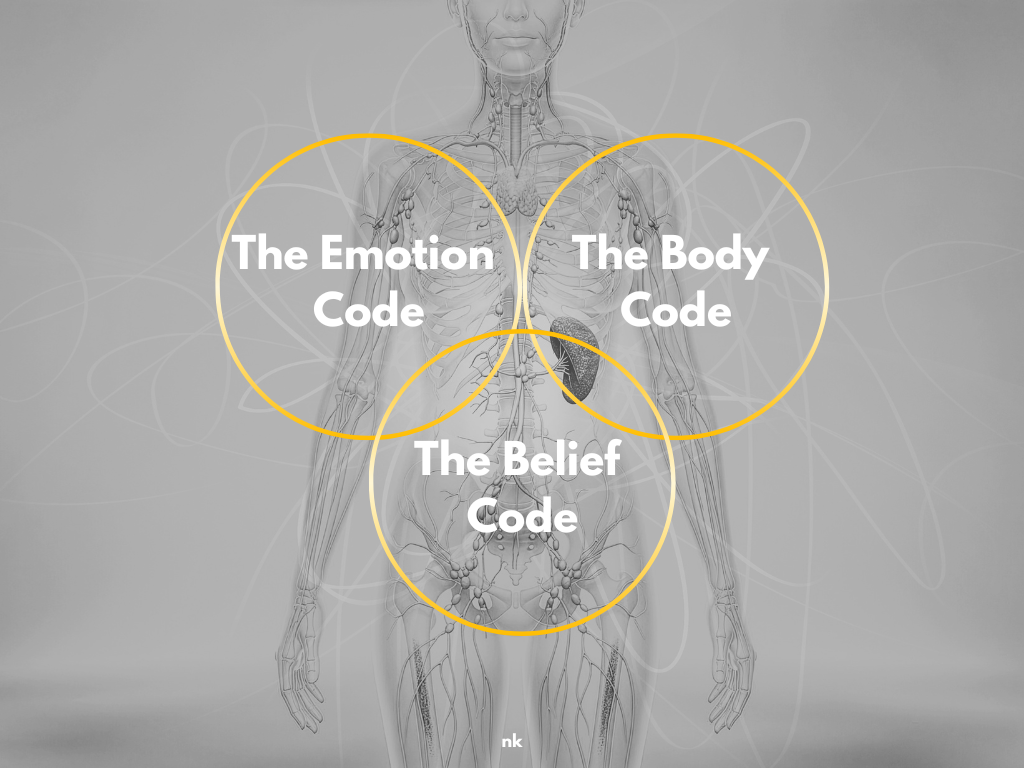
Dr. Bradley Nelson, a retired chiropractor and the founder of Discover Healing, created three connected methods: The Emotion Code®, The Body Code™, and The Belief Code®.
Each method uses muscle testing as a form of biofeedback. The practitioner asks focused questions and observes the body’s muscle response.
Within these systems, muscle testing helps the practitioner communicate with the subconscious mind. The practitioner then follows a structured process to identify a possible emotional, energetic, or belief-related imbalance.
These methods remain complementary wellness approaches. They do not diagnose, treat, or cure medical or mental health conditions.
The Emotion Code®
The Emotion Code focuses on identifying and releasing what Dr. Nelson calls Trapped Emotions.
A Trapped Emotion represents emotional energy that the body may have retained during a difficult experience. You may have felt grief, anger, fear, shame, sadness, or another emotion without fully processing it.
During a session, we use muscle testing and The Emotion Code chart to identify the emotion. We may also ask when it originated or whether your body needs more information.
We then use intention and magnetic energy along the governing meridian to support the release process.
Clients often describe feeling lighter, calmer, clearer, or less emotionally reactive. Experiences vary, and the body may process each session differently.
The Emotion Code may also include identifying a Heart-Wall®. Dr. Nelson describes the Heart-Wall as layers of trapped emotional energy that the subconscious may form around the heart for protection.
The Body Code™
The Body Code expands beyond emotional energy.
This system helps us explore six main areas of potential imbalance:
- Energies
- Circuits and systems
- Toxins
- Pathogens
- Misalignments
- Nutrition and lifestyle
We use a structured mapping system to narrow the inquiry. The process may lead us toward emotions, body systems, muscles, organs, glands, meridians, chakras, structural areas, nutritional needs, or lifestyle stressors.
The Body Code does not replace laboratory testing, medical evaluation, nutrition care, or physical treatment. It offers another way to ask what may need support.
A session may help you notice connections that you had not previously considered. For example, workplace pressure may connect with an old emotion, a limiting belief, or an area of physical tension.
The Belief Code®
The Belief Code goes deeper into the subconscious belief systems that may shape your choices and expectations.
A subconscious belief can influence how you respond to opportunity, conflict, visibility, relationships, money, leadership, health, or personal growth.
You may consciously want to change while an old belief quietly says:
Change is unsafe.
I cannot trust myself.
I must prove my worth through overworking.
Other people’s needs matter more than mine.
Healing is not possible for me.
The Belief Code helps us trace an unwanted belief system through several interconnected layers. These may include negative programs, limiting beliefs, faulty core beliefs, and faulty core identities.
We then seek to release the belief system and introduce supportive positive statements.
The Belief Code may feel especially helpful when skepticism carries an emotional charge. The goal is not to force you to believe in energy healing. Instead, we can explore why trying something new feels unsafe, uncomfortable, or unacceptable.
Releasing one deeply rooted belief may create changes beyond your wellness journey. It may support clearer boundaries, healthier leadership, stronger self-trust, and more confident decisions. Discover Healing describes The Belief Code as a system that builds upon The Emotion Code and The Body Code to address unwanted subconscious beliefs.
How Energy Healing May Support Leadership
Your inner patterns accompany you into every meeting, decision, and relationship.
A fear of rejection may prevent you from offering an idea. A belief about conflict may keep you from setting a necessary boundary. Old feelings of inadequacy may lead you to overprepare, overwork, or micromanage.
Energy healing may help you explore the subconscious patterns beneath these behaviors.
As those patterns shift, you may notice greater awareness before reacting. You may communicate more clearly, recover from stress more easily, or feel safer trusting yourself.
This work does not remove every workplace challenge. It may help you meet those challenges from a more grounded place.
Healthy leadership requires more than productivity. It requires self-awareness, emotional regulation, adaptability, empathy, and the ability to make clear decisions under pressure.
Supporting yourself does not distract from your leadership. It strengthens the person doing the leading.
Four Ways to Explore Energy Healing Thoughtfully
1. Begin With Curiosity
You do not need complete belief before your first session. Bring your questions and allow yourself to observe.
2. Choose One Clear Intention
Consider one issue you would like to explore. It might involve stress, confidence, boundaries, visibility, sleep, or a repeating emotional pattern.
3. Track Subtle Changes
Notice your reactions, thoughts, choices, energy levels, and relationships. Meaningful changes may feel gradual rather than dramatic.
4. Continue Appropriate Professional Care
Energy healing should complement qualified medical and mental health care. Speak with the appropriate professional about persistent, worsening, or concerning symptoms.
You Are Allowed to Make Your Well-Being a Priority
You do not have to wait for burnout before supporting yourself.
You also do not have to understand every possible mechanism before exploring a complementary wellness practice. Science often begins with observation, questions, and a willingness to investigate something we do not yet fully understand.
Current research into biofield therapies remains promising in some areas and inconclusive in others. We need larger studies, stronger controls, consistent protocols, and transparent reporting.
At the same time, your lived experience matters.
In The Emotion Code, The Body Code, and The Belief Code sessions, I offer a compassionate space to explore emotional energy, body imbalances, and subconscious beliefs. We follow your body’s pace without forcing a specific outcome.
You may come because you feel stressed, blocked, disconnected, or uncertain. You may also come because you want to understand yourself more deeply.
Together, we can explore what your subconscious mind may be ready to reveal and release.
This work may help you create a lighter, brighter, and more manageable life. It may also help you lead, work, connect, and make decisions with greater clarity.
Your healing does not belong at the bottom of your list.
It can become part of how you live.

XO!
Nico’l